Furnaces play a critical role in aluminum die casting and foundry operations.
Their primary function is to maintain molten aluminum at a stable operating temperature before it is transferred to the production process.
Many facilities face the same challenge: premature refractory lining failure, leading to increased maintenance costs, unplanned downtime, and even the risk of molten metal leakage.
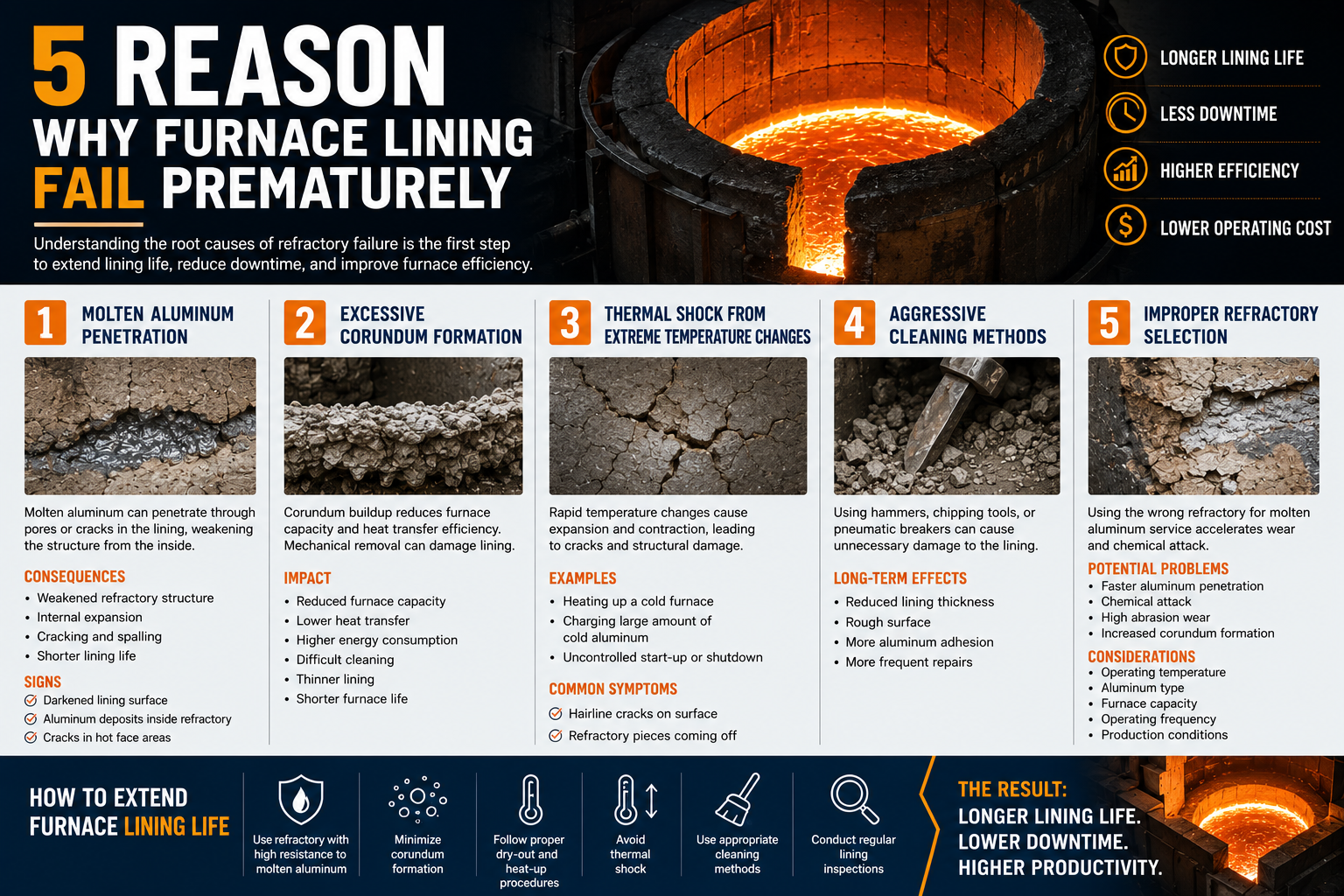
1. Molten Aluminum Penetration into the Refractory
One of the biggest enemies of refractory linings is molten aluminum itself.
When refractory pores become too large or the material begins to deteriorate, molten aluminum can penetrate deep into the lining.
Consequences:
- Weakening of the refractory structure
- Internal expansion within the lining
- Cracking and spalling
- Reduced lining service life
Common Signs:
- Darkened refractory surfaces
- Aluminum deposits found within the refractory
- Cracks appearing in areas exposed to molten aluminum
2. Excessive Corundum Formation
Corundum is a hard deposit formed by the reaction between molten aluminum, oxygen, and refractory materials.
If left untreated:
- Furnace capacity decreases
- Heat transfer efficiency declines
- Energy consumption increases
- Cleaning becomes more difficult
What is often overlooked is that mechanical removal of corundum can also damage the refractory lining.
Impact:
- Accelerated refractory wear
- Reduced lining thickness
- Shorter furnace service life
3. Thermal Shock Caused by Extreme Temperature Changes
Thermal shock occurs when furnace temperatures change too rapidly.
Examples:
- Rapid heating of a cold furnace
- Charging large quantities of cold aluminum
- Uncontrolled startup and shutdown procedures
Consequences:
- Sudden expansion and contraction of the refractory
- Formation of hairline cracks
- Progressive structural damage over time
Common Symptoms:
- Hairline cracks on the lining surface
- Pieces of refractory beginning to detach
4. Aggressive Cleaning Methods
Many operators use hammers, chipping tools, or pneumatic breakers to remove corundum and buildup.
While effective for cleaning, these methods can significantly damage the refractory lining.
Long-Term Effects:
- Reduced lining thickness
- Rougher refractory surfaces
- Increased aluminum adhesion
- More frequent repair requirements
Improper cleaning practices are often an overlooked cause of premature lining failure.
5. Improper Refractory Selection
Not all refractory materials are designed for direct contact with molten aluminum.
Using an unsuitable refractory can accelerate lining deterioration.
Potential Problems:
- Faster molten aluminum penetration
- Chemical attack
- High abrasion wear
- Increased corundum formation
Selecting the right refractory requires consideration of:
- Operating temperature
- Aluminum alloy type
- Furnace capacity
- Operating frequency
- Production conditions
How to Extend Holding Furnace Lining Life
- Use refractory materials designed for molten aluminum contact
- Minimize corundum formation
- Follow proper dry-out and heat-up procedures
- Avoid thermal shock conditions
- Implement appropriate cleaning methods
- Conduct regular lining inspections
Conclusion
Most holding furnace lining failures are not caused by high temperatures alone.
They are typically the result of a combination of molten aluminum penetration, corundum formation, thermal shock, aggressive cleaning practices, and improper refractory selection.
Understanding these root causes can help manufacturers extend lining life, reduce downtime, and improve overall furnace efficiency.
One-Stop Solution for Better Furnace Performance
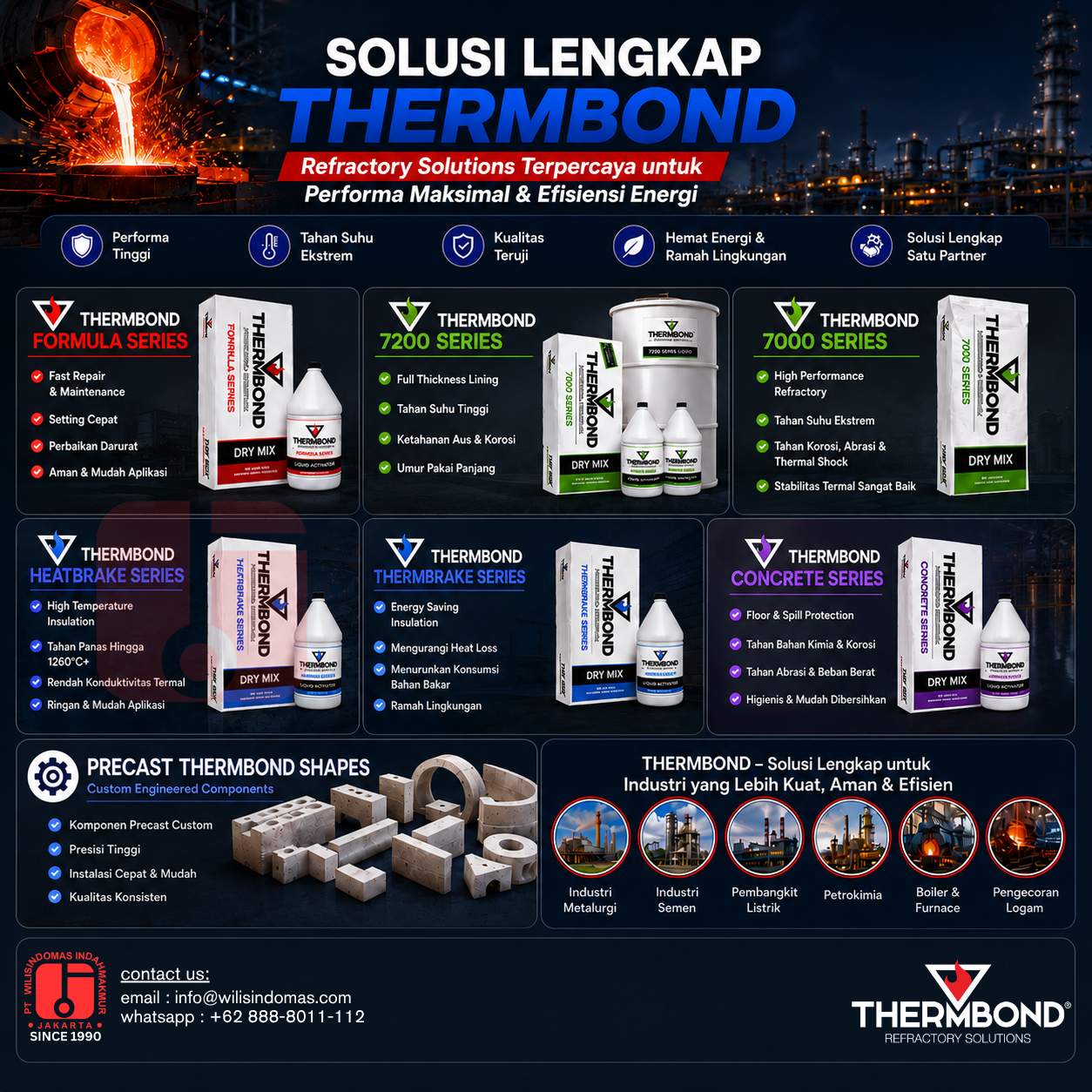
Thermbond offers advanced refractory solutions specifically engineered for the aluminum industry, including melting furnaces, holding furnaces, launders, ladles, and other critical areas exposed to molten aluminum and corundum buildup.
With its naturally non-wetting technology, excellent thermal shock resistance, and fast dry-out capabilities, Thermbond helps manufacturers:
- Reduce molten aluminum penetration
- Minimize corundum formation
- Extend refractory lining service life
- Accelerate repair and furnace startup times
- Reduce production downtime
- Improve overall furnace efficiency
PT Wilisindomas Indahmakmur provides Thermbond refractory solutions to help aluminum, die casting, and foundry operations optimize furnace performance, reduce maintenance costs, and maximize productivity through a comprehensive and integrated approach.
Protect Your Lining. Reduce Downtime. Maximize Productivity.