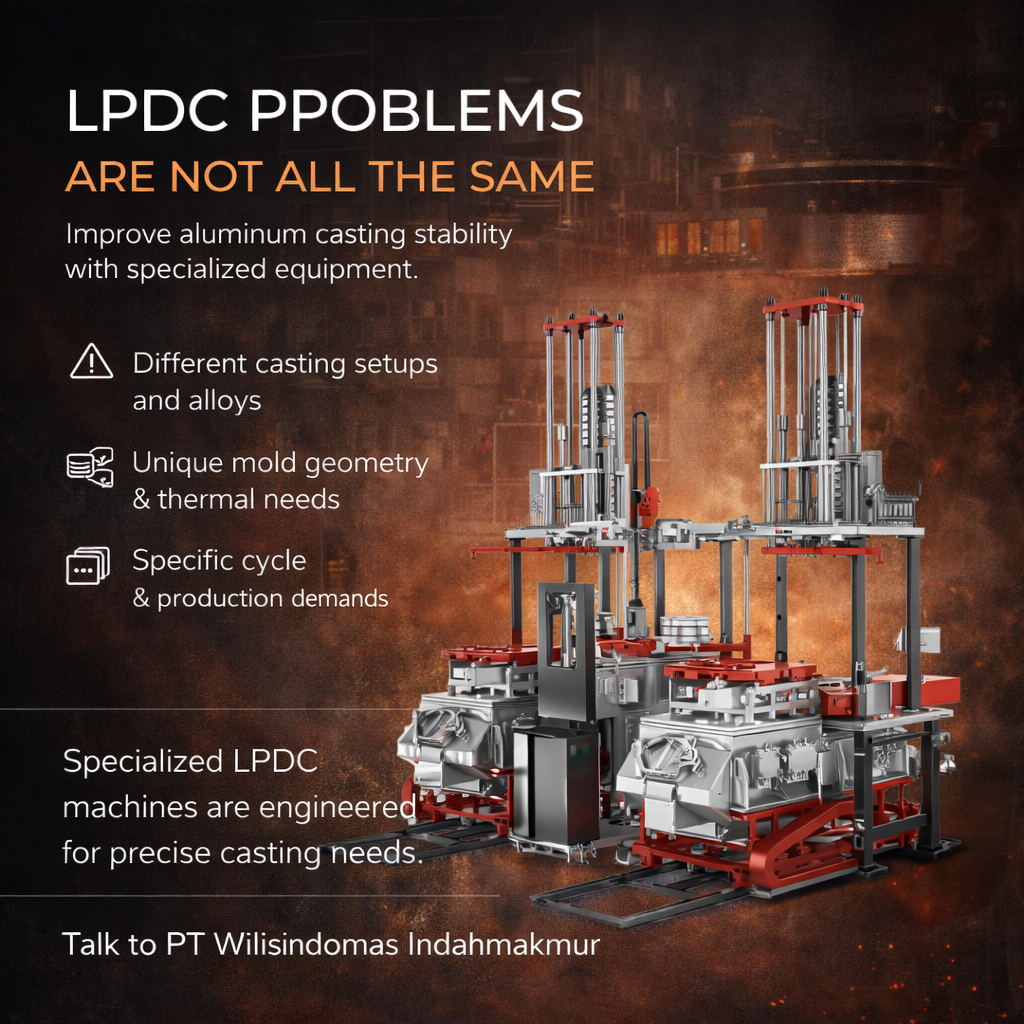
LPDC Problems Are Not All the Same
Low Pressure Die Casting (LPDC) has become an essential process for producing high-quality aluminum components with excellent surface finish, dimensional stability, and reduced turbulence during filling. It is widely used in applications such as automotive wheels, structural components, and precision aluminum castings.
However, while LPDC technology offers clear advantages, it also presents its own set of operational challenges. Many foundries encounter persistent production issues and often assume they are caused by process parameters or operator error.
Why LPDC Systems Become Difficult to Manage
LPDC machines operate through a carefully controlled pressure system that pushes molten aluminum from the furnace into the mold through a riser tube. Unlike gravity casting or high-pressure die casting, LPDC relies heavily on precise pressure control, thermal stability, and coordinated system design. When machine systems are not optimized for the casting requirements, several problems can arise:
- Inconsistent metal filling behavior
- Pressure instability during the casting cycle
- Difficulty controlling metal flow speed
- Incomplete mold filling or shrinkage defects
- Process variability between cycles
Why LPDC Problems Are Not All the Same
Every LPDC operation has its own combination of variables, including:
- Casting geometry and wall thickness
- Mold design and thermal management
- Alloy characteristics
- Production cycle time requirements
- Furnace integration and metal handling systems
The Importance of Specialized LPDC Machine Design
A well-designed LPDC system must deliver stable pressure control, consistent metal flow, and reliable cycle repeatability. Key factors include:
- Accurate pressure control systems
- Stable metal delivery from furnace to mold
- Precise control of filling speed
- Integration between furnace, riser tube, and casting unit
- Robust machine structure for long-term reliability
TIHO LPDC Machines: Designed for Complex Casting Requirements
TIHO LPDC machines are engineered specifically to handle complex aluminum casting operations that require precise pressure control and consistent filling performance. These machines are designed to provide:
- Stable low-pressure control for consistent metal flow
- Reliable system integration between furnace and mold
- Precision filling behavior for complex geometries
- Repeatable casting cycles for high production stability
- Strong machine durability under demanding industrial conditions
Supporting Stable LPDC Production
For manufacturers producing high-value aluminum components, LPDC stability is critical. Small fluctuations in pressure or filling speed can affect casting integrity, leading to defects, process interruptions, and reduced productivity. Machines designed specifically for LPDC operations provide the foundation needed to maintain process control and casting consistency. PT Wilisindomas Indahmakmur provides advanced LPDC solutions including TIHO LPDC machines designed to support stable, high-quality aluminum casting operations.