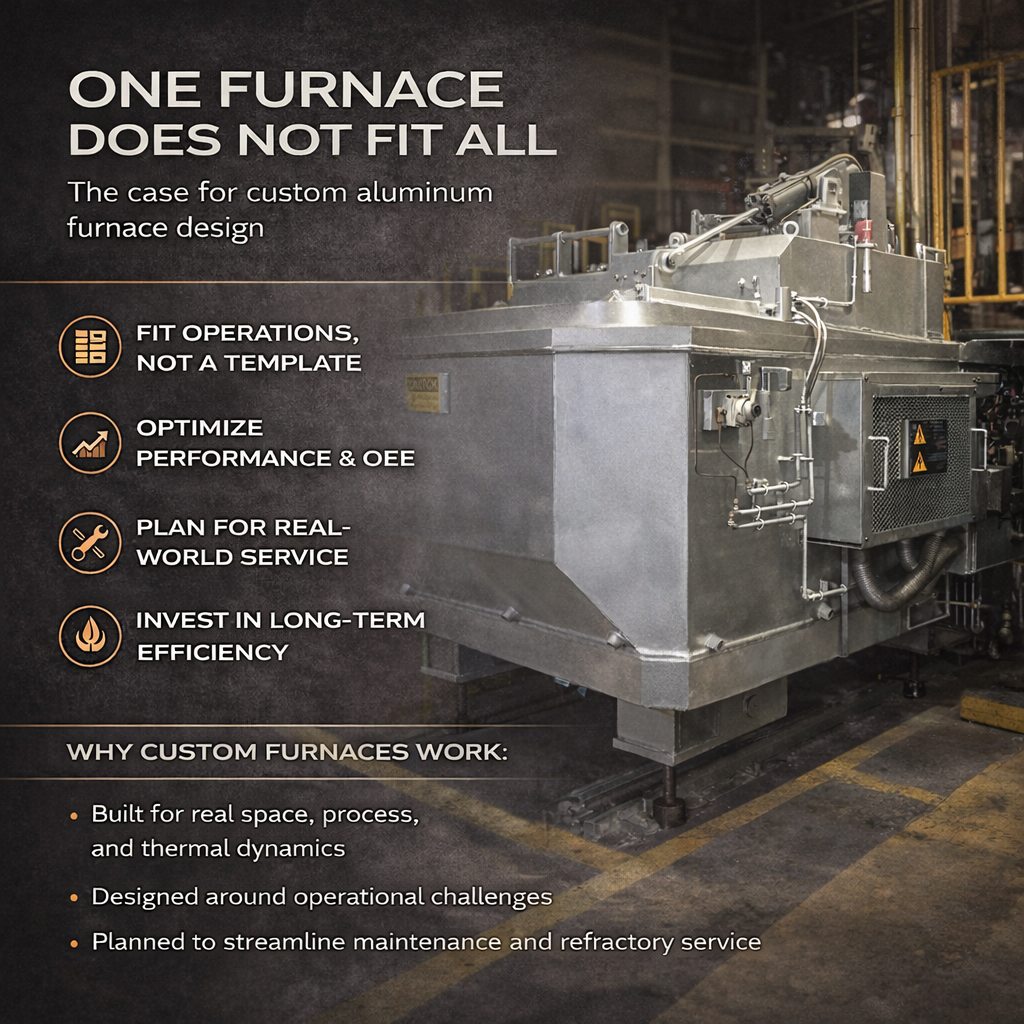
In aluminum melting and holding operations, furnaces are often treated as standardized equipment. Many facilities purchase “off-the-shelf” systems expecting them to integrate seamlessly into existing layouts and production flows. However, one common and costly reality soon becomes clear: One furnace does not fit all.
Limited flexibility in furnace design and repair can quietly restrict production efficiency, increase downtime, and reduce overall equipment effectiveness (OEE). For plants operating under tight space constraints and aggressive output targets, a generic furnace solution can become a long-term operational bottleneck.
Standard furnace configurations are typically built around generalized assumptions: average layout, typical throughput, and common operating cycles. But real facilities rarely operate under “average” conditions.
Common pain points include:
Over time, these compromises translate into:
Custom furnace design shifts the focus from “what is available” to “what is required.” A properly engineered furnace system begins with understanding:
Design expertise alone is not enough. Real improvement comes from combining engineering principles with practical field experience. PTWI Furnace Project Division brings hands-on operational insight into every project. This includes:
Another major advantage of custom design is improved serviceability. When furnace access points, refractory thickness, burner layout, and structural clearances are planned intentionally, repairs become faster and more predictable. Downtime can be reduced because maintenance teams are not fighting poor accessibility or design limitations. Instead of adapting repair procedures to suit a rigid structure, the furnace is built to support efficient maintenance from the beginning.
Custom furnace systems offer long-term benefits, including:
If your operation experiences:
PT Wilisindomas Indahmakmur, through its Furnace Project Division, provides custom furnace design and project solutions tailored to each facility’s layout, process conditions, and performance targets. From concept engineering to installation support, our approach is based on real field experience and operational alignment, ensuring that each furnace solution is built not just to operate, but to optimize. Because in modern aluminum operations, efficiency is not achieved by standardization alone.It is achieved by precision alignment between equipment and process.
In aluminum melting and holding operations, furnaces are often treated as standardized equipment. Many facilities purchase “off-the-shelf” systems expecting them to integrate seamlessly into existing layouts and production flows. However, one common and costly reality soon becomes clear: One furnace does not fit all.
Limited flexibility in furnace design and repair can quietly restrict production efficiency, increase downtime, and reduce overall equipment effectiveness (OEE). For plants operating under tight space constraints and aggressive output targets, a generic furnace solution can become a long-term operational bottleneck.
Standard furnace configurations are typically built around generalized assumptions: average layout, typical throughput, and common operating cycles. But real facilities rarely operate under “average” conditions.
Common pain points include:
Over time, these compromises translate into:
Custom furnace design shifts the focus from “what is available” to “what is required.” A properly engineered furnace system begins with understanding:
Design expertise alone is not enough. Real improvement comes from combining engineering principles with practical field experience. PTWI Furnace Project Division brings hands-on operational insight into every project. This includes:
Another major advantage of custom design is improved serviceability. When furnace access points, refractory thickness, burner layout, and structural clearances are planned intentionally, repairs become faster and more predictable. Downtime can be reduced because maintenance teams are not fighting poor accessibility or design limitations. Instead of adapting repair procedures to suit a rigid structure, the furnace is built to support efficient maintenance from the beginning.
Custom furnace systems offer long-term benefits, including:
If your operation experiences:
PT Wilisindomas Indahmakmur, through its Furnace Project Division, provides custom furnace design and project solutions tailored to each facility’s layout, process conditions, and performance targets. From concept engineering to installation support, our approach is based on real field experience and operational alignment, ensuring that each furnace solution is built not just to operate, but to optimize. Because in modern aluminum operations, efficiency is not achieved by standardization alone.It is achieved by precision alignment between equipment and process.